


.gif)







.jpg)
Nikon Coolpix A Compact Camera with APS-C Sensor Announced
We were most surprised by the launch of Nikkor 80-400mm lens, but surprised in a very good way. The first thought I had was – “Finally!” And not just because it’s a long awaited lens, but because it was a lens in the first place and not yet another mildly refreshed camera. I admit that, at first, I didn’t really pay much attention to other products Nikon announced. Perhaps I should have (let me tell you a secret – I’m just trying not to be judgmental in advance). Say hello to Nikon’s first APS-C compact camera, the Coolpix A.
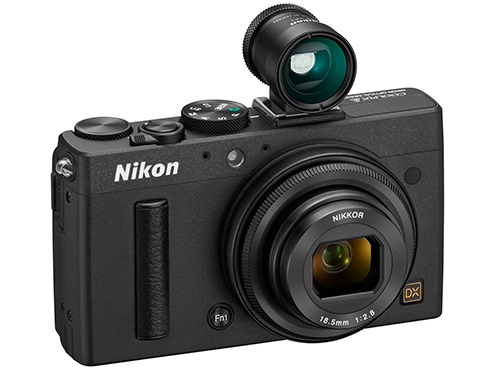
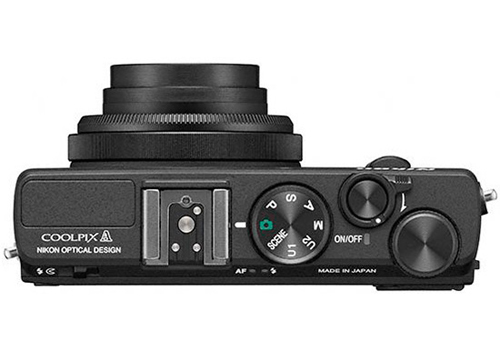
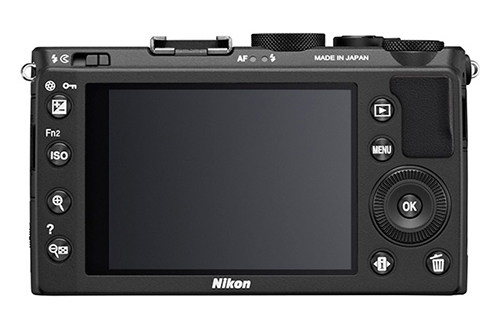
Interestingly, the Coolpix A has a fixed lens that’s a proper wide-angle with focal length of 18.5mm (28mm FF equivalent) and a reasonable aperture of f/2.8. The lens, as with most compact cameras, retracts into the body when the camera is turned off and makes it a very pocket-friendly piece of equipment indeed. Even when the camera is turned on, it’s very small and unassuming. Looking at the camera, you’d never guess it is capable of such a high technical image quality. In normal mode, the lens focuses down to rather uninspiring 50cm, but can do as close as 10cm in macro mode (much more like it). There’s a manual focus ring around the lens, too. Shutter speeds range from the usual 30s to a decent-for-a-compact 1/2000th of a second and continuous shooting of up to 4 fps is available. On the back of the Coolpix A, there’s a 3″ 921k dot LCD screen for shooting and reviewing images. 14 bit RAW files are supported, which more serious photo enthusiasts will appreciate. The camera weights in at as near as makes no difference 300g with the battery that’s good for approximately 230 shots.
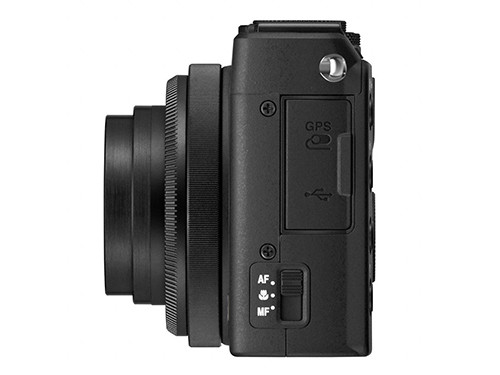
First and foremost, Coolpix A has no viewfinder. Fujifilm, on the other hand, monsters the Nikon with not one, but two – an optical one as well as current state-of-the-art EVF. I even dare say this alone will be worth the extra size and weight of Fujifilm’s venerable compact for many. I understand size is a factor, but really, Nikon, this is a flagship compact you’ve announced. Do they really want customers to pay extra for an optional viewfinder? I bet they do. Question is – will customers feel that’s fair? When Sony announced the $2800 RX-1, lack of an EVF instantly put me and many other photographers off. Nikon has just made that exact same mistake, unfortunately. Lack of a viewfinder is not all, though. There’s the contrast-based AF. It may be too early to judge, especially with Olympus OM-D putting up a very convincing fight against all the hybrid AF cameras out there, but both phase- and contrast-detect systems have generally proved to be both quicker and more reliable. More than that, Nikon was one of the first to implement such a system into their 1 series cameras. Why omit hybrid AF from their flagship compact camera that costs more?
As I’ve mentioned, the 16.2 megapixel sensor used in this camera should be extremely good. But in all fairness, the 16 megapixel X-Trans unit found in Fujifilm’s X100s is probably a little better in terms of sharpness and high ISO noise, so technical quality is not a reason to choose the Coolpix. Fujifilm also seems to offer a little more direct control and is easier to operate because of that. Looking at the paper, there’s more reasons why Coolpix A causes doubt. The 18.5mm f/2.8 Nikkor lens is both a positive and a negative of the camera. While very suitable for street and indoors photography, it’s not the best choice as an all-rounder – simply too wide for that. Fujifilm’s 35mm equivalent lens with a faster maximum aperture of f/2 is much more versatile as far as prime lenses go, and will work well with a broader range of subjects. You can almost forgive the relative slowness of the Nikkor because of its small size, but that focal length can be a blessing as well as a curse.
By no means am I saying this is a bad camera. No. It isn’t. I can tell even before I’ve had the chance to use it. But I have very serious doubts it’s $1100 good. To put that into perspective, the newly announced interchangeable Sony NEX-3N, which is almost identical in size without a lens and not unbearably bigger with one mounted, will cost you less than half that and pack a kit zoom lens with it. Of course, it doesn’t even have a mode dial. But then, price reflects that, not to mention you’d be buying into a versatile system. I therefore believe there’s nothing so expensive in the Nikon Coolpix A to justify that high price, not even exclusivity as far as the whole concept of such a camera goes. Hold on. Parts of Coolpix A are made of magnesium alloy. Could that be the reason for that frankly shocking price? Right. That’s me being ironic.
Even with all that in mind, I have strong belief it will prove to be rather popular. Perhaps more so among compact-camera users than enthusiasts, many of whom would probably prefer the X100s. Let’s not pretend, seriously. Fujifilm may be even more expensive than the Coolpix when it’s not paired with that preposterously priced viewfinder, but you also seem to get much more for your money and a much more attractive package overall.
Specifications and Pre-Order Information
Here are the main specifications of the Nikon Coolpix A compact camera:
16.2 megapixel CMOS sensor
Native 100-6400 ISO range
Contrast-detect AF system
4 frames per second continuous shooting
3″ 921k dot LCD screen
18.5mm f/2.8 Nikkor lens with 10cm minimum focus distance in macro mode
Battery good for around 230 shots
Body-only weight (with battery) 299g (0.66 lb/10.55 oz), and it’s tiny!
Priced at approximately $1100